Opinion: The Fleadh Parade Was Lost. We Still Don’t Know Why
Since organisers confirmed there will be no official All-Ireland Fleadh marching band parade in Belfast, one question has dominated conversations among bands, supporters and Fleadh followers across the country.
Why?
It is a fair question.
Explore the Fleadh Results Archive
70 Years of Results • 1957–Present • Updated Every Year
Discover historical All-Ireland and Ulster Fleadh marching band results, previous winners, competition records and statistics from over 70 years of competition.
Nobody disputes the challenge of bringing Ireland’s biggest celebration of traditional music and culture to Belfast. Hosting the All-Ireland Fleadh is an enormous undertaking and everyone involved deserves credit for securing the event.
But the explanation provided so far has left many people searching for answers rather than finding them. Organisers have referred to “detailed operational planning” and “a range of factors associated with delivering an event of this scale”. That explains that a decision was made. It does not explain why one of the Fleadh’s longest-standing traditions could not be accommodated when every host town for decades has found a way to do so.
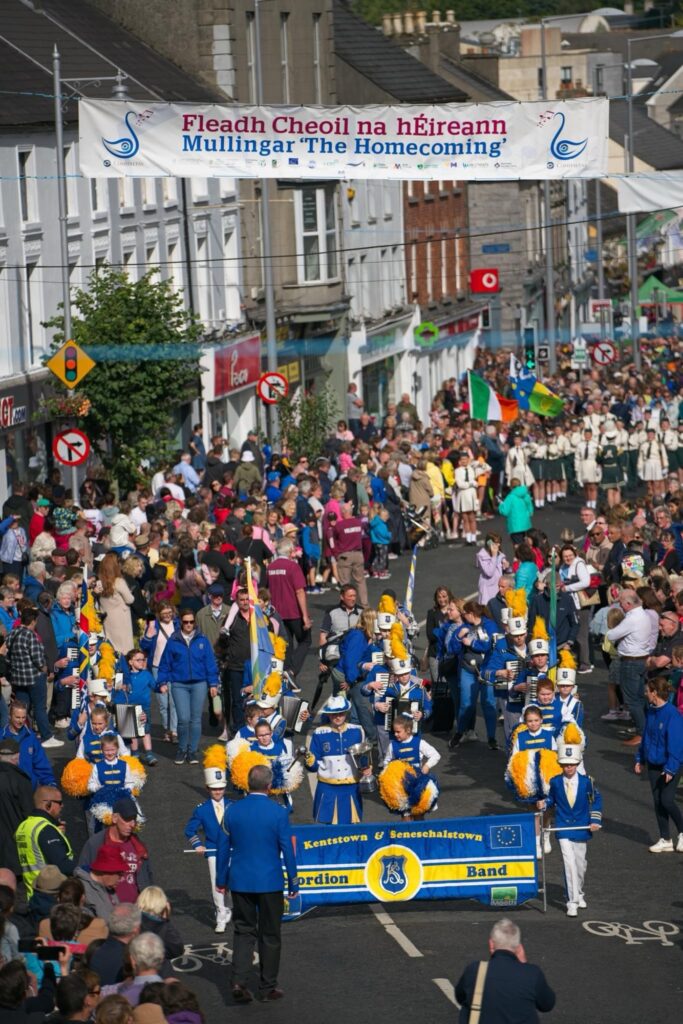
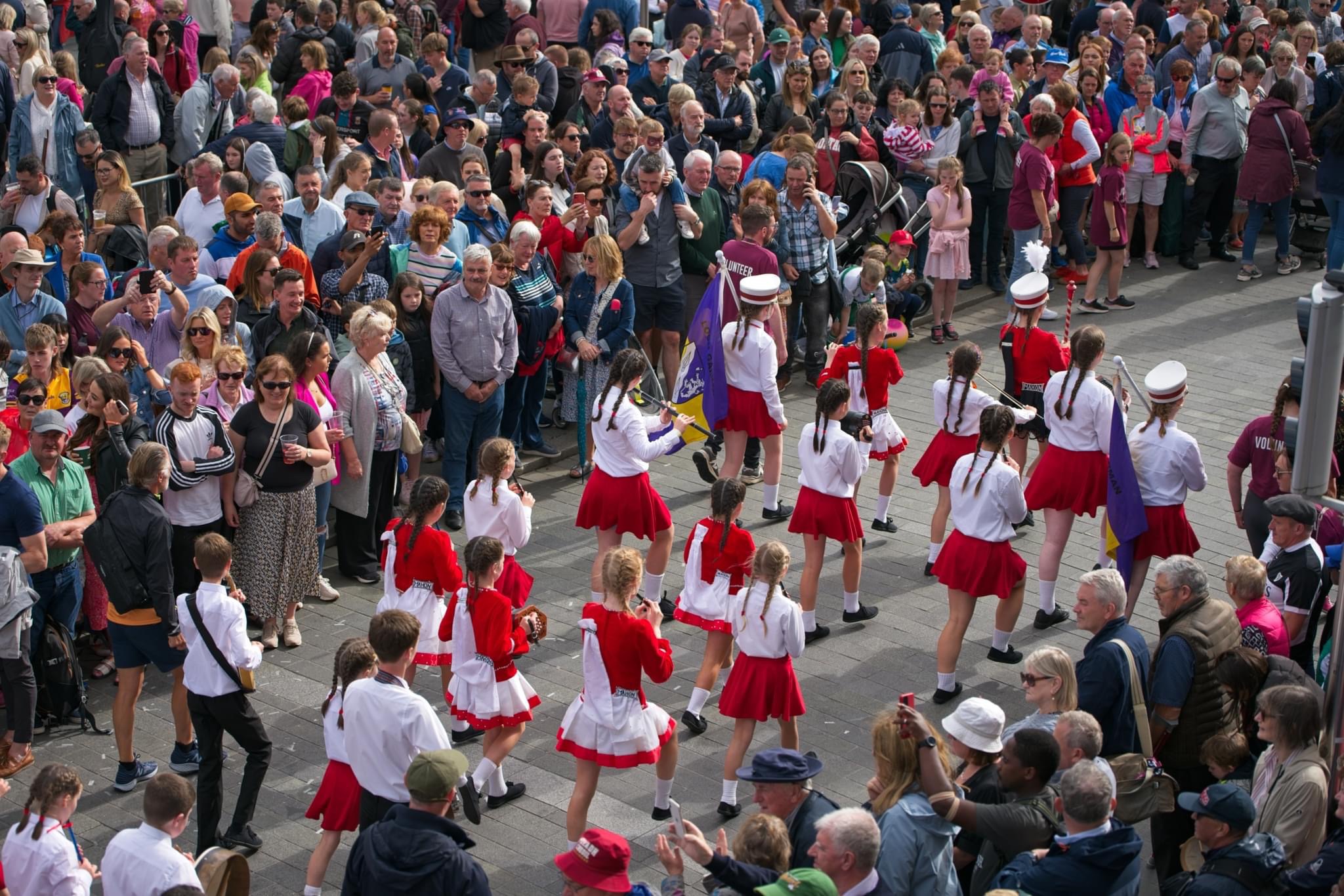
For generations, the marching band parade has been far more than simply walking through the streets. It is the moment the competition ends and the celebration begins. For one afternoon, rivalries are forgotten and bands that have spent months preparing to compete come together as one. County, provincial and Irish flags are carried proudly through the host town while families, supporters and thousands of Fleadh visitors line the streets.
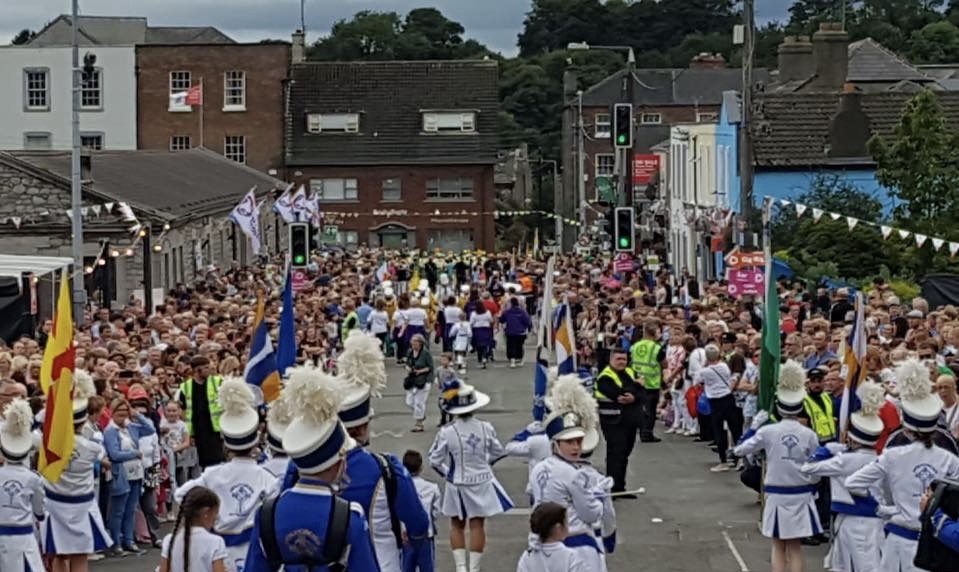
The parade transforms the host town. Streets fill with music, spectators line the route several deep, and bands that have spent the day competing march together through the heart of the Fleadh. It is one of the few moments when the wider public gets to experience the marching band tradition at its very best.
This year, that tradition will not happen.
Around 200 to 300 musicians are expected to compete in the marching band competition, alongside hundreds more parents, families and supporters. Bands will travel from every corner of Ireland—from Donegal, Mayo, Meath, Wexford, Westmeath, Tyrone and Down—to perform on what is the biggest day of their year. Countless mornings, evenings and weekends are spent rehearsing, fundraising and preparing for what is the pinnacle of the marching band season. The competitions will still crown champions, but the celebration that follows has been taken away.
Unlike many other Fleadh competitions, the marching band events take place away from the main festival hub. The parade has always been the opportunity to bring those musicians into the heart of the Fleadh and showcase this unique tradition to thousands of people who might otherwise never experience it.
For traditional musicians, the Gig Rig is the celebration beyond the competition stage. For marching bands, the parade has always been that moment.
Every recent host town has recognised its importance.
Cavan did.
Derry did.
Sligo did.
Ennis did.
Mullingar did.
Drogheda did.
Wexford did.
In Ennis, bands were even given Garda escorts to the parade assembly point, underlining the detailed planning and importance placed on ensuring the tradition could continue.
In Cavan, bands performed at the Gig Rig as part of the parade in front of thousands of spectators.
In Wexford, both the 2024 and 2025 opening ceremonies featured massed pipe band performances, recognising the contribution marching bands make to the wider Fleadh.
The last six Ulster Fleadh were held in Northern Ireland Castlewellan, Dromore and Warrenpoint were all able to host parades.
So why is Belfast different?
Perhaps there are perfectly valid operational reasons. If there are, they should be explained. Doing so would answer many of the questions now being asked and help prevent unnecessary speculation.
It is worth remembering that Belfast did not secure the All-Ireland Fleadh at the first attempt. Earlier bids were criticised because they did not contain enough emphasis on the Irish language and Irish culture, among other issues.
That makes it all the more disappointing that one of the festival’s most visible celebrations of Irish musical culture has disappeared. The parade is a celebration of achievement, music and Irish culture that belongs alongside every other part of the Fleadh.
There is another historical comparison that cannot be ignored.
When Ards CCÉ hosted the Ulster Fleadh in Bangor in 2016 and 2017, the marching band competitions were the only section held away from the main festival, taking place in Portaferry, around 40 minutes from Bangor. No public explanation was ever given.
Now, as the host branch for the All-Ireland Fleadh, another significant decision has affected the marching band competitions.
Whether those decisions are connected or entirely coincidental, they have understandably left many wondering whether marching bands are receiving the same prominence as every other part of the Fleadh.
There is no evidence that politics influenced this decision. However, Belfast has a unique political history and parades, flags and public celebrations inevitably carry sensitivities that do not exist in many host towns elsewhere in Ireland. In the absence of a fuller explanation, it is perhaps inevitable that some people will wonder whether factors beyond simple logistics influenced the outcome. The only way to address those questions is through openness and transparency.
That is why Marching Bands Ireland has submitted Freedom of Information requests seeking documents and correspondence relating to the decision-making process from Belfast City Council.
Those requests are not intended to prove a particular theory or point the finger at any organisation. They are intended to establish the facts. If the reasons are entirely operational, publishing them in greater detail would help answer the one question that has been asked repeatedly since this decision was announced.
Why?
Despite the disappointment, this should not become a story about division.
Belfast deserves a successful Fleadh.
The competitors deserve a successful Fleadh.
The organisers deserve recognition for the enormous amount of work involved in staging an event of this scale.
But traditions matter.
Once they are lost, they can be incredibly difficult to recover.
The marching band parade has never simply been about marching from one point to another. It is where competitions become celebrations, where rivals become friends again and where hundreds of musicians stand shoulder to shoulder, regardless of who won or lost, celebrating a shared tradition that has been part of the Fleadh for generations.
If an official parade cannot take place this year, perhaps there is still an opportunity for the bands themselves to come together and mark the occasion publicly in another way.
But above all, planning should begin now to ensure this tradition returns in 2027.
The parade should never become an optional extra.
It is part of what makes the All-Ireland Fleadh unique.
Let’s make sure 2026 is remembered as the year the tradition was paused—not the year it quietly disappeared forever.