
Ranafast Band Marks 50 Years of Music, Tradition and Community
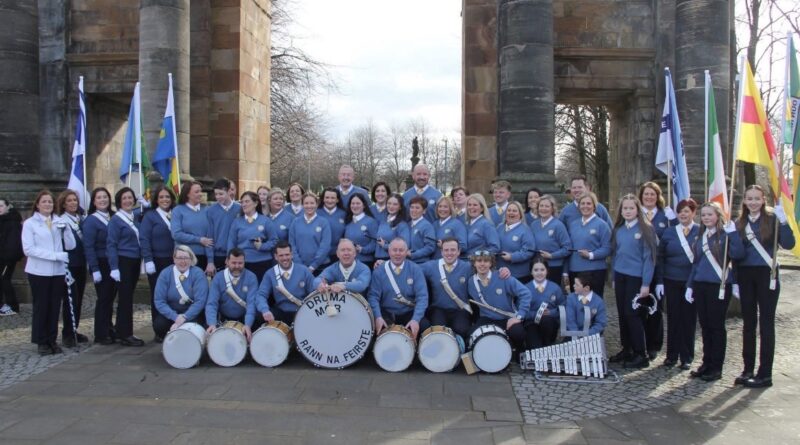
In 2026, the Ranafast Band—known proudly as Druma Mór, Rann na Feirste—celebrates its 50th anniversary, marking half a century of music, tradition, and community spirit.
The band was founded in 1976 to mark the golden jubilee of Coláiste Bhríde. On 6th June that year, the band made its very first outing—an occasion that marked the beginning of a journey few could have imagined at the time. As one long-standing member reflected, “no one could have imagined the journey that lay ahead.”
Early Years and the Move to Competition
From 1977 to 1980, the band maintained a strong local tradition, marching on St. Patrick’s Day and Easter Sunday, and attending Mass in Annagry. In 1980, a significant decision was made as the band stepped into the competitive arena.
A strong rivalry quickly developed, particularly with the Keadue Band. Around this time, the band benefitted from the guidance of Fergus Cobain, and notably, women were welcomed into the band for the first time—an important milestone that helped shape its future. Reflecting on that period, a former member noted that “standards improved, ambition grew, and the band began to make a name for itself.”
Success and Rivalries
In 1986, the band travelled to Listowel for the Fleadh Cheoil, finishing second behind Clooney Band. That result proved to be a turning point, with one member recalling how it “lit a spark—and a rivalry—that would drive the band forward.”
The late 1980s proved to be a golden era. New members joined, fresh ideas emerged, and under the direction of Doc O’Connor, the band introduced a new level of precision and style to both marching and drill.
In 1987, Ranafast were crowned All-Ireland Champions for the first time, with further titles following in 1990 and 1991.
One of the band’s most remarkable achievements came in 1989 at the Champion of Champions competition in Derry’s Guildhall. On that occasion, the band achieved a perfect score of 100 points, winning best music, best conductor, best drum corps, and best overall band—described by a senior member as “a remarkable accomplishment by any standard.”
Musical Evolution and New Challenges
By the early 1990s, having achieved success across multiple levels of competition, the band sought new challenges. In 1993, members took up silver concert flutes, marking a bold and ambitious new direction. That same year, they secured victory at the Ulster Fleadh in Newry.
The mid-1990s saw the band reach exceptional musical heights. Competing in Belfast, they achieved notable success, including a win in 1996 with Eine kleine Nachtmusik by Wolfgang Amadeus Mozart. In 1997, further honours followed with performances of works by Johannes Brahms, Gilbert and O’Sullivan, and Offenbach.
For a band from west Donegal, this period was, as one former member described it, “something truly special.”
Challenges and Revival
Like many organisations, Druma Mór Rann na Feirste faced challenges. By 2000, with members moving away for work and college, the difficult decision was made to step back from activity.
However, as one returning member later put it, “the story didn’t end there.”
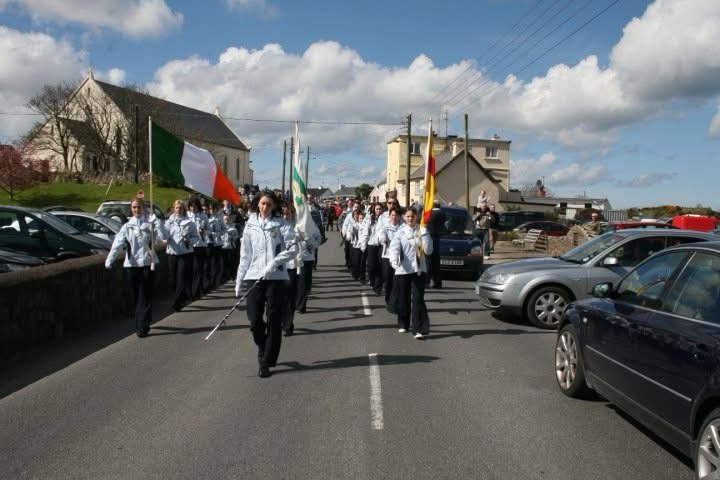
In 2008, the band returned, and since then has gone from strength to strength. Today, nearly 50 members continue the tradition, marching annually from Ranafast to Annagry, travelling to Gweedore on St. Patrick’s Day, and performing in Dungloe on Easter Sunday, alongside appearances in local venues and communities.
Celebrating 50 Years
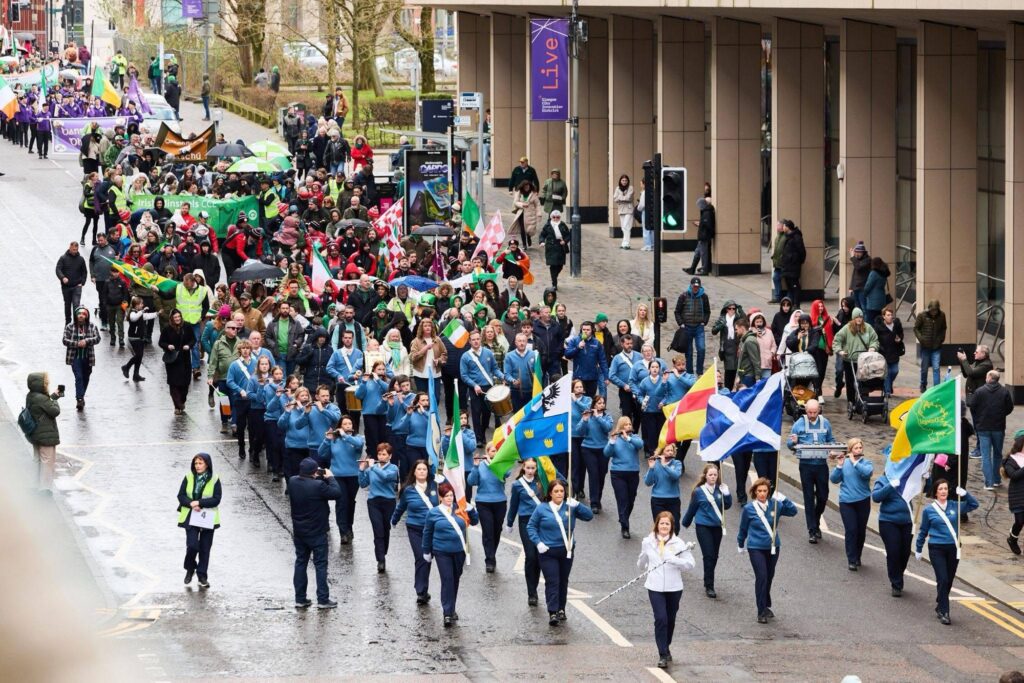
To mark its 50th anniversary, the band travelled to Glasgow for the St. Patrick’s Day Parade in 2026. The theme of emigration was particularly fitting, reflecting the deep historical connections between Donegal and Glasgow over generations. It was described by a participating member as “a proud and memorable occasion for everyone involved.”
Looking ahead to Easter Sunday 2026, the celebrations continue with a special gathering of past and present members. As one current member noted, it is an opportunity to “march together once again, to celebrate not just music, but community, friendship, and shared history.”
A Tribute to Those Who Made It Possible
The success and longevity of the band would not have been possible without the dedication of many individuals.
The band remembers with great respect those who are no longer with us—Tony Doherty, Jimí Mhicí Jimí, Fergus Cobain, Seamús Gallagher, and Doc O’Connor—each of whom played a vital role in shaping its legacy.
Gratitude is also extended to Denis and Susan McGarvey for their tireless work in maintaining uniforms, instruments, and preserving the band’s history.
Special recognition is given to Hughie Doherty and Donal Rua O’Donnell, whose commitment over 50 years has been central to the band’s success. As one long-serving member expressed, “for 50 years, they have been the heart and soul—guiding, teaching, inspiring, and above all, keeping it alive.”
Their legacy lives on not only in the music, but in the friendships, pride, and spirit that define An Druma Mór.
More Than Music
At its heart, Druma Mór Rann na Feirste is about more than competition or performance.
It is about people.
It is about community.
And it is about a tradition that continues to bring generations together.
As the band celebrates this milestone anniversary, it does so with pride and optimism for the future.
As one member simply put it: “Here’s to the next 50 years.”