
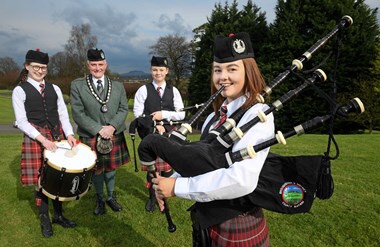
The Role of Bagpipes in Irish Marching Bands
Bagpipes are among the most distinctive instruments associated with Irish and Scottish musical traditions. In Irish marching bands they add a rich, evocative sound that immediately signals heritage and history. The drone and chanter combine to create harmonies that cut through outdoor acoustics, making them ideal for parades and festivals. Traditionally, pipe bands were separate ensembles, but over the years more mixed marching bands have incorporated pipers to diversify their sonic palette and pay homage to Celtic roots.
Incorporating bagpipes into a marching band requires careful arrangement and coordination. Pipers must blend with brass and woodwind sections while still maintaining the characteristic timbre of their instrument. Directors often select repertoire that complements the pipes—slow airs for reflective moments and lively jigs or marches for upbeat sections. Drummers trained in Scottish pipe band style may join to form a dedicated corps that supports the pipers’ rhythm. Uniforms may also reflect Highland influence, with tartan accents or kilts added to the band’s attire.
Despite their strong cultural associations, bagpipes continue to evolve within the marching band scene. Modern pipers experiment with harmony, extended techniques and fusion pieces that incorporate contemporary genres. Some bands perform medleys that weave pipe tunes into popular music arrangements. By celebrating the bagpipe’s heritage while embracing innovation, Irish marching bands ensure this unique instrument remains a vibrant part of their performances.